
OUR COMMITMENTS
CLIMATE
In a context of climate change, demand for lower-carbon energy and modes of transport is intensifying.
To continue meeting the needs of the regions where we operate, we are adapting to the challenges of the transition.
Our commitments
Our climate strategy reflects our ability to support energy transitions, combining the resilience of our business model with that of the regions we serve.

Reduce the carbon footprint of our operations

Further develop our
low-carbon activities
Reduce the carbon footprint of our operations
We are working to decarbonise our own operations and our logistics chain. To this end, we have set a target for 2030 of an absolute reduction in our greenhouse gas emissions — a commitment made all the more demanding by our growth ambitions.
Our target
Our target:
-20%
greenhouse gas emissions from our operations (2030 vs 2019)
Our action plan
• Reduce our scope 1 & 2 emissions by 20% by 2030 compared with 2019
Beyond their impact on the climate, our operations may disturb ecosystems that we know to be fragile. We therefore pay particular attention to preserving biodiversity and water resources and to reducing our footprint on the natural environment (accidental spills, atmospheric emissions), by applying high HSE standards wherever we operate, including where regulations do not require it.
Reduce the energy consumption of our facilities
Replacement of energy-intensive equipment (refinery furnaces, heating systems, etc.)
Roll-out of energy efficiency measures
Adapt our shipping operations
Integration of biofuels
Routes optimisation
Control and monitoring of bitumen heating on board vessels
Decarbonise our storage and distribution operations
Energy efficiency measures, including insulation for bitumen storage
Integration of biofuels and solarisation of our assets
• Reduce emissions from our outsourced transport (targeted scope 3A*) by 20% by 2030 compared with 2019
*emissions from outsourced transport (land and sea), upstream electricity and business travel of Rubis Énergie, representing more than 50% of Rubis Énergie’s scope 3A emissions (2019 baseline).
Reduce emissions from our land logistics
Route optimisation
Fleet renewal
Integration of biofuels
Support the decarbonisation of our shipping providers
Route optimisation
Integration of biofuels
Disclaimer: the greenhouse gas emission reduction targets set for scopes 1 and 2 are based on the data, methodologies and assumptions available to date, in particular the 2019 baseline year and the decarbonisation levers identified by Rubis (biofuels, energy efficiency, electrification, etc.). These projections reflect the current state of technologies and markets, and take into account the operating conditions known at the time they were drawn up. Given the uncertainty inherent in future regulatory, technological and economic developments, as well as possible changes in scope or activity, the actual achievement of these targets may differ from the anticipated trajectories. Estimates and the implementation of action plans are reviewed regularly to reflect these developments.
Learn more about our action plan
Reduce our scope 1 & 2 emissions by 20% by 2030 compared with 2019
Beyond their impact on the climate, our operations may disturb ecosystems that we know to be fragile. We therefore pay particular attention to preserving biodiversity and water resources and to reducing our footprint on the natural environment (accidental spills, atmospheric emissions), by applying high HSE standards wherever we operate, including where regulations do not require it.
*émissions du transport externalisé (terrestre et maritime), de l’amont de l’électricité et des voyages d’affaires de Rubis Énergie, soit plus de 50 % des émissions du scope 3A de Rubis Énergie (base 2019).
Reduce the energy consumption of our facilities
Replacement of energy-intensive equipment (refinery furnaces, heating systems, etc.)
Roll-out of energy efficiency measures
Adapt our shipping operations
Integration of biofuels
Optimisation of routes
Control and monitoring of bitumen heating on board vessels
Decarbonise our storage and distribution operations
Energy efficiency measures, including insulation for bitumen storage
Integration of biofuels and solarisation of our assets
Reduce emissions from our outsourced transport (targeted scope 3A*) by 20% by 2030 compared with 2019
*emissions from outsourced transport (land and sea), upstream electricity and business travel of Rubis Énergie, representing more than 50% of Rubis Énergie’s scope 3A emissions (2019 baseline).
Reduce emissions from our land logistics
Route optimisation
Fleet renewal
Integration of biofuels
Support the decarbonisation of our shipping providers
Route optimisation
Integration of biofuels
Disclaimer: the greenhouse gas emission reduction targets set for scopes 1 and 2 are based on the data, methodologies and assumptions available to date, in particular the 2019 baseline year and the decarbonisation levers identified by Rubis (biofuels, energy efficiency, electrification, etc.). These projections reflect the current state of technologies and markets, and take into account the operating conditions known at the time they were drawn up. Given the uncertainty inherent in future regulatory, technological and economic developments, as well as possible changes in scope or activity, the actual achievement of these targets may differ from the anticipated trajectories. Estimates and the implementation of action plans are reviewed regularly to reflect these developments.
Further develop our low-carbon activities
We are broadening our energy offering by developing more sustainable alternatives to conventional fuels. Our low-carbon activities, biofuels and photovoltaic electricity generation, support our customers’ decarbonisation.
Our target
Our target:
x5
low-carbon EBITDA by 2030 (vs 2025)
Our action plan
Grow our Photovoltaic Electricity Production activity
Reach a secured portfolio of 2.5 GWp and consolidated EBITDA of €50-€55 million by 2027
Support our customers in their energy transition
Develop our portfolio of low-carbon molecules
Support our customers in the electrification of uses
Learn more about our action plan
Grow our Photovoltaic Electricity Production activity
Reach a secured portfolio of 2.5 GWp and consolidated EBITDA of €50-€55 million by 2027
Support our customers in their energy transition
Develop our portfolio of low-carbon molecules
Support our customers in the electrification of uses
Further develop our low-carbon activities
We are broadening our energy offering by developing more sustainable alternatives to conventional fuels. Our low-carbon activities, biofuels and photovoltaic electricity generation, support our customers’ decarbonisation.
Our target:
x5
low-carbon EBITDA by 2030 (vs 2025)
Learn more about our action plan
Grow our Photovoltaic Electricity Production activity
Reach a secured portfolio of 2.5 GWp and consolidated EBITDA of €50-€55 million by 2027
Support our customers in their energy transition
Develop our portfolio of low-carbon molecules
Support our customers in the electrification of uses
Zoom on...
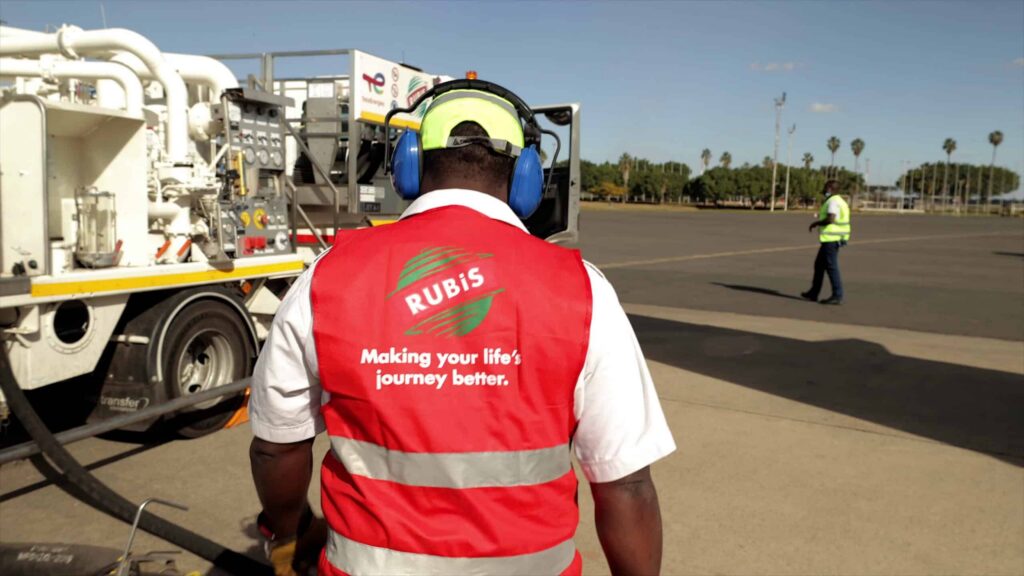
Rubis Energy Kenya is decarbonising its logistics
Rubis Energy Kenya has demonstrated our ability to balance business growth with reducing our carbon footprint, cutting emissions from fuel transport by almost half whilst distributing almost double the volume of energy products.
Logistics operations have become more efficient and more energy-efficient through targeted actions such as route optimisation, improved truck loading rates and the gradual phase-out of small-capacity vehicles.
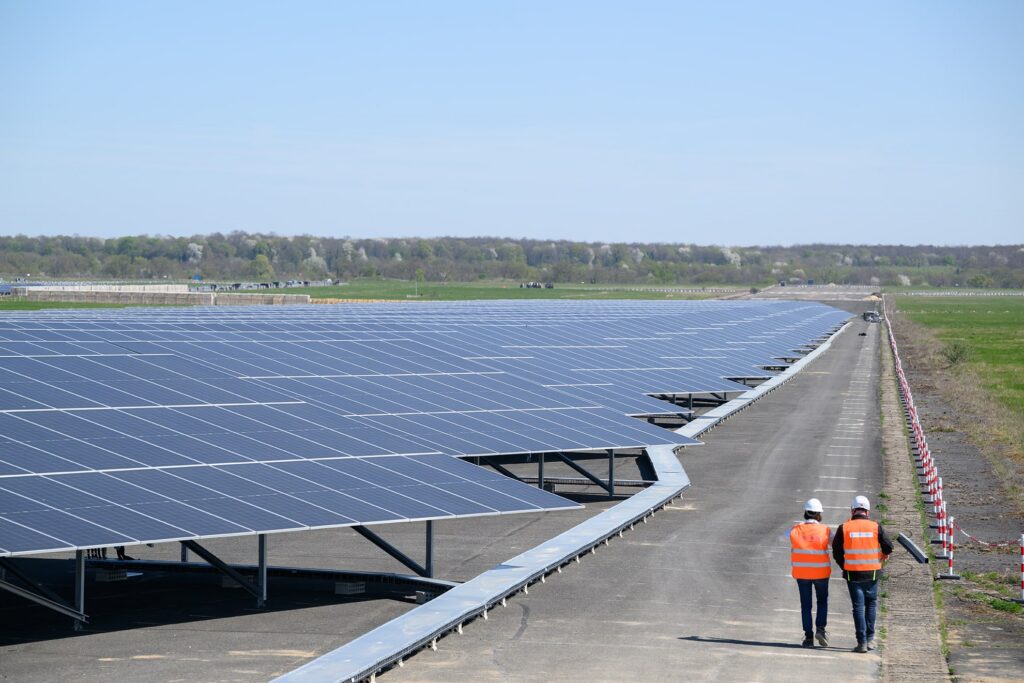
The Creil solar farm, Rubis Photosol, France
With an installed capacity of 200 MWp, this facility, built on a former military air base, is one of the largest in France. It will generate an average of 202 GWh of renewable electricity per year, enough to supply the equivalent of 85,000 people.
The project combines the redevelopment of former military brownfield land, large-scale low-carbon electricity production and integrating biodiversity considerations, while generating lasting economic benefits for the local area and strengthening national energy sovereignty.